· 23:09
The Rise of Remote Work: Tools and Strategies for Productivity
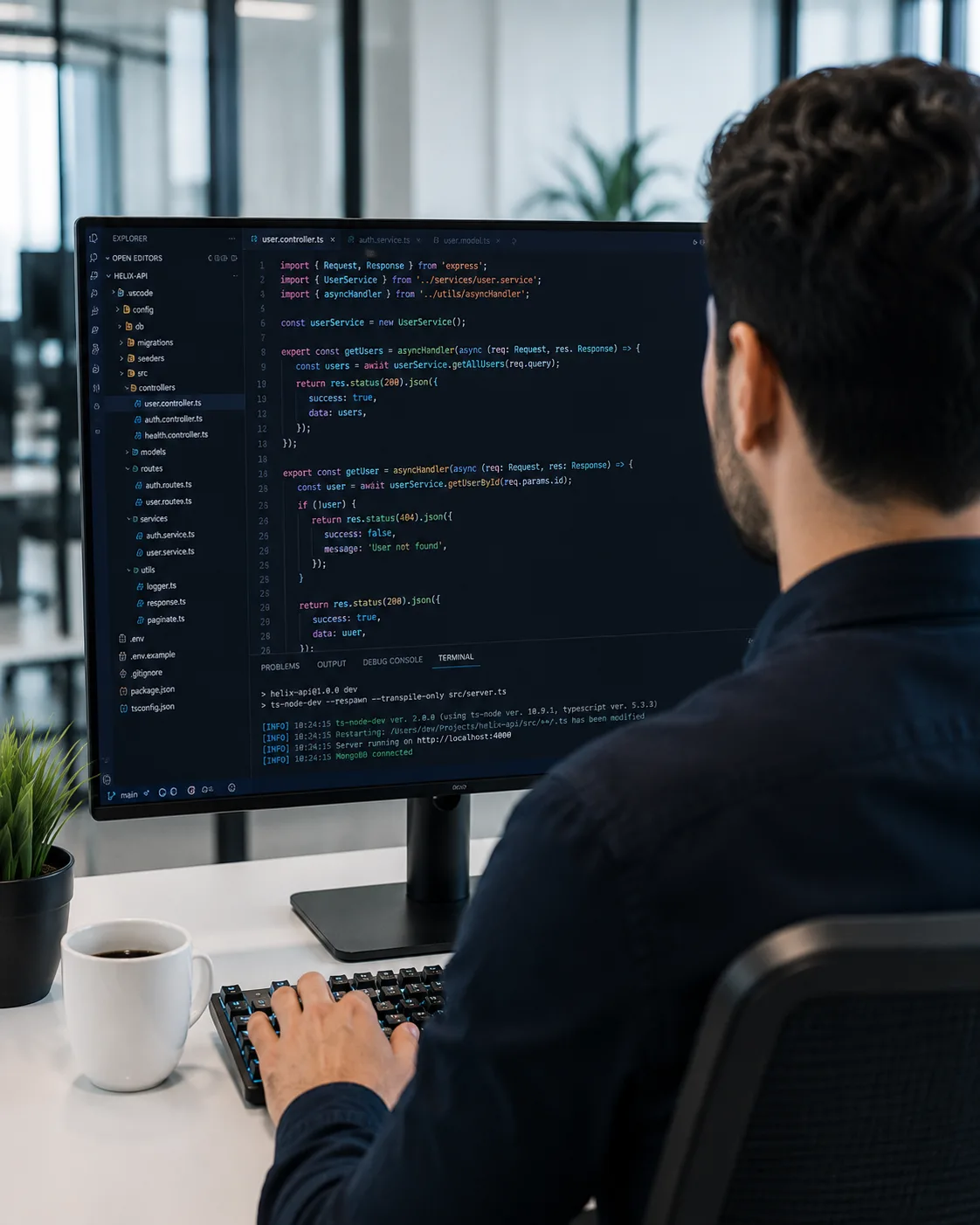
With remote work positions continuing to rise in popularity, we are sitting down with our all-remote team to discuss some strategies we use to stay productivity at work - while at home!
Transcript
[Music] [Music] hello everyone I'm Jason vitner from triple helix Corporation and welcome to another episode of our Helix Insider podcast I'm joined in studio today from two of my senior developers Sam Sheldon and Andy Webster welcome everyone today we want to talk talk about a topic that's very near and dear to our hearts and that is the tools and strategies for productivity in remote work um I think everyone can agree that during pandemic when we're all uh quarantined and staying at home we saw a huge rise and remote work uh among our companies and our clients and our colleagues and uh everyone can attest that uh for some companies that was quite a challenge being able to Pivot to a remote work situation um triple helix is aany we've always been a remote work uh work at home company um all of the staff have their own remote offices and some of them are not even here in Connecticut you know we have staff all over the country um and so thankfully for us the remote work wasn't a challenge
however we did acknowledge that because we were already remote um during pandemic we actually were blessed with the productivity bonus that we've always had um however um wanted to talk a little bit today about some of the challenges and as well as some of the opportunities and some of the best practices that we've had in working remotely and wanted to share that with you uh so let's start with you Sam um what are some of the benefits that you see in being able to work for mely yeah so for me so as Jason said some of us don't even live in Connecticut I'm one of those people I actually live in Maine and one of the big biggest things about working remotely now that I live here is that we get a lot of snow up here in Maine like our whole winter is just usually there's at least a foot of snow on the ground in heck I think we've got we're supposed to get a foot of it next week um and I also I have a long driveway so there are days when I am legitimately kind of snowed in and it is so nice to
not have to worry about digging myself out of my driveway in pre-dawn hours of the day just to get to work means I can just I can get up I can say yep there's snow out there I'll clear it when I get to it but right now I can go to work and get things done that's pretty massive for me and also just not having not having all the noise and bustle of an office can also be really nice there's not like there's not you know people over in a different corner of the room having a phone call nobody's walking by my desk all that good stuff awesome Sam um sorry Andy your thoughts to comment on your snow situation yeah it's nice not to have to shovel immediately I uh I've I I felt bad sometimes I've got really nice neighbors and they see that I haven't shoveled yet and they'll come over and snow blow my driveway and I'm like oh you didn't have to do that I was gonna come out eventually but thank you but um but um yeah there's that you know definitely because you don't have to drive you don't have to
um hustle in the morning really um you can get up make your breakfast bring it to your desk um and uh and you know if you have kids you can you don't have to have that time of commuting between that you usually would have if you're going to an office so there's that family benefit too that you just um you know if your work was a half an hour away you get an hour back of time that um you know you wouldn't have otherwise and not to mention the wear and tear in your car the gas all that stuff um adds up and um but and honestly and then but the biggest benefit I would say is not having the uh the hustle and bustle of an office I know certain people like that it's I guess it's just um a preference in some cases but um I I find I get a lot more done when I don't have um somebody having a distracting conversation over there or um or somebody coming up to check on me for something that um you know they could have they could have sent me a message to have that conversation and then um you know
things like that it's just um you you get it's it's easier to stay focused because you can set your environment in some sense I mean we do we do keep in touch throughout the day with our team but um it's different in that sense that um if people are having a conversation on slack and you need to focus you can just close it move it away go focus on what you need to do and um you know you can really uh you can choose a little better uh what is coming in as far as inputs into your office right right I mean as a member of the long driveway Club I greatly appreciate not having to run outside and uh shovel the driveway right away and hell sometimes uh we have the opportunity to wait for the rain to come and then you don't have to shovel at all that's actually kind of nice but so okay it's it's not it's not all sunshine China and Roses though sometimes so sometimes the remote work can have some of its own challenges too um Sam why don't you share some of the challenges we have with remote work
it's not all sunshine and Roses as I say yeah I think Andy touched on the fact that since we're not in an office most of our communication is going on via phone or slack and there really is sometimes no substitution for being able to just put something down on the desk in front of somebody and point at it and say this is what I need help with or this is what I need done or it's this bit here that we're struggling with like there's things like zoom and screen share and phone calls like that gets you 90% of the way there but sometimes there just really is no substitute for just being able to physically point at something or like for example I know recently Jason there was something that we needed to be able to print like in a very specific way and you had to like mail me physically mail me over the course of a I think it took maybe a week to get here a printed copy of this which is always annoying when if we were in the same office it would have been a 30 second drop it on my desk and also
sometimes it's sometimes you just miss being able to sit next to a coworker because that is sometimes nice to do it's nice to have the option I know there was a period of time actually when I still lived in Connecticut I think it was a power outage actually where Andy and I had both gone into the office and that was kind of nice just to have that you know made a big desk you know work made a big desk sat on opposite sides of it got to pass papers back and forth read each other's terrible handwriting there's a camaraderie to that that I that you do miss out on yeah no I can I can definitely agree to that that um although I do feel like I'm more productive working from home I um I I do sometimes miss that being in an office talking to somebody behind you um it's you know it's a morale a boost thing um so I do find that I need to uh when I'm done for the day I usually want to go somewhere I want to get out of the but um you know whether that's like growery shopping or go see my family or
something like that or get out with the kids but um you know it's just um that is a downside I'll say but um I I don't think it overweighs the um the upsides of it necessarily you just have to you have to maintain that balance yourself because it's not um laid out for you as if you're driving into a place every day right absolutely so um I'd like to Pivot now to talking about some of the tools that we use for remote productivity um Sam You' mentioned earlier slack for our listeners who aren't familiar with that it's it's basically instant messenger um Microsoft teams is a similar tool um and you know remote work collaboration and productivity tools I have to say for me personally the slack instant messaging has been probably one of the biggest productivity drivers I have ever seen for our company and the reason for it is that you can email rather not email sorry instant message somebody on slack slack will tell you if they're actually working because you get a little Green Dot that says
they're actually there working in live you can send them a message and you know that they can get back to you almost immediately um and there's something interesting about like if you phone somebody there's like this personal social contract that we follow where it's like hey how are you doing and blah blah blah and you don't have that with instant messaging you just say exactly what you want or what you need and they respond to exactly what you need and so you actually your method of communications is that much faster the other thing that we do here at triple helix is we set up channels so very specific channels for very specific topics we're working a specific project we'll make a channel that is that project's name and then things and and Communications relevant to that project are are discussed in that channel so it's helps to sort of segregate all of the noise like you're actually talking about a certain subject in the channel and when the channel has a new message it lights up to
say hey something's new here and you don't have to focus on it I mean that's the productivity benefit you can just like ignore it until you're ready but if you're actively working on that project somebody posts to the channel you're like oh what did this person say what did this person need so for me I felt it's really really powerful and you know the other stuff we have you know phone calls Zoom calls um the instant messaging a traditional email of course all those things are really well and good but for me I think number one is instant messaging has really resonated with me personally curious on your thoughts for both of you on on what tools we use and obviously things I haven't even mentioned here I mean Trello is a good thing that we use for um oh yeah let's talk about that tell our you listeners what Trello is yeah we use Trello for um for managing uh projects so we use another thing called connectwise which we'll touch later um to manage our time and like a larger chunk of like this
is our project this is our task but tra we use for breaking down smaller smaller components of a project so you know say you're designing um a bunch of reports for something and you want to split it out amongst all your team members you could um basically just make little cards and split out okay you're going to do um you know the consumption report you're going to do the sales report you're going to do the um the TPS report and uh you know I don't know why that popped into my head but um you know um you could split it out you could say okay Sam you're going to do this one you know Pedro you're gonna do this one you could you could split it out between your team members and then um you know it's it's a can it's a kban can ban I don't know how you say it but um so you can you know have little call of you know done in progress um these kinds of things and you can move it along and you can make comments and uh it's pretty interactive so you can kind of leave a note for whoever picks it up
next that um they have a good idea of what you did if you took good notes and um and uh you know and also so that people managing the projects can come in and see what's like just pop in and see at a glance like uh what's done what's not done so um you do have to keep up with it but um it's it's useful for uh communication remotely very very quickly I find yeah we've used it for I think we've used it for workflow management as well because R now rather than having to go to whoever's doing our testing and say hey Bob can you test XYZ we just drag the card over to the testing column and then Bob will know hey there's there's testing to be done here is exactly what needs to be tested we'll put a note on it that says where you need to go to test it what it's supposed to do things like that and then it'll either be cleared okay it's good to go or it gets moved back into our backlog with a note about whatever issue there was things like that so helps kind of clarify the workflow too which is
something that I think in a lot of offices I know in the past I've done that on like a whiteboard sometimes you'll just and sometimes in an actual office it's just just as easy to go and tap somebody on the shoulder but it's nice to have that enforcement of like your actual workflow yeah I will say like the tool sets that we use you know we've carefully selected them to be affection and you know it's not just about running out out and grabbing the next tool oh if I have this next thing it's going to make me more efficient it's about deciding which tools you're going to use and you know you mentioned connectwise there a moment ago so you know on this podcast we talk a lot about our manufacturing customers and they're using something called an Erp or enterprise resource planning Software System they use those tools to run their companies at triple helix we actually our Erp is a software program called connectwise and it's pretty much like an Erp but it's done for software developers and
MSP PS managed service providers and it's amazing it it does everything we need to do to keep ourselves organized our time our projects our finances but in the case of Trello Trello is a very surgical laser-like focused project tracking tool that allows us to get really granular and you know when the team first came to me and said hey we want to use Trello and I'm like I'm a little nervous because you know you can go death by too many software tools and after reviewing it and I was like okay you know pulling this out of connectwise so the project itself can get managed and tracked made a lot of sense um but you know for anyone out there thinking about like how to make their companies more efficient through software I mean be careful what you pick but when you do find a good one TR always worked very well for us um then by all means jump in with it and because it's remote work again you know these tools allow you to be remote collaborative people can be working in those boards online and
you're not actually limited by um uh being in an office per se um so I want to Pivot uh to our next topic and that's just really just strategies for making remote work productive and and working well for you and you know it's very very important to have a have a dedicated workspace for your remote work uh you know in a pinch you can spread out on the kitchen table but reality is is that if you're going to be efficient you have to have a workspace you have to have an office even if it's in home um and the idea that you establish a daily te for when you're going to be in that office and when you're not because unfortunately if you're at home the work life balance seems to blend over so half the time you're working and you're really not working you're on working you're in personal stuff and the other half of the time you're actually doing personal stuff in your work office and blending that can actually get to be a problem so it's very important to know you know where your work ends and where
your life begins kind of a thing and remote work makes that more challenging so making sure that you do have that sep separation and of course not working all the time cuz your remote work is right there in front of you all the time there's a tendency for us to go like oh I'll go well go do some work and you know work a few more hours and the next thing you know you're burning out and you know I love Sam and Andy share some of those um thoughts and strategies with me because I'm or on listeners because I'll tell you I've I've been guilty of that right you get into the office at 9:00 a.m and then all of a sudden it's 10 p.m.
and you're like what happened to the day so what do you guys think I've got pretty clear boundaries because I have kids so they come in here at the moment that um they know when I get out of work and they come in here and say all right Dad time to put in your time that's what my daughter says and so so I do she's my little reminder but um so you know I I have that but um also I I mean my uh you know I have a dedicated space and I don't really use it for anything else other than than working um but um yeah I mean to me it's pretty clear I just you know the set the set hours again just um you know 9 to 5:30 you know and um if I do have something else that I need to finish I'll usually come back much later you know come back at night or something and I'll set myself like a a time limit and be like all right I'm going to work on this for an hour or two hours or something like that and see how see how far I get um but just um I don't know to me I I generally those are pretty ingrained to me
by now but it kind of as you as you do it more you kind of get more used to like self-managing your work time versus your um home time and um and the other thing to add to that is uh just um the the kind of person that I am sometimes I'll have something that's just burning on me you know like I have to finish that or else I'm not going to be able to sleep and the the the uh sometimes I can I can go sit down and actually solve that problem and sometimes after you you know you uh have not thought about it for a while and then you think about it again a couple hours later you're like oh that's so much easier and usually you get it done in like 15 minutes so uh and not having to drive all the way to an office to do that is is definitely um nice I when I'm not actually working shut my door I I practice the out of sight out of mind if I'm working I come in here and I work I usually I come in here and work at my desk occasionally I'll work out in my living room or something because sometimes
I just want to look out the big window and enjoy the enjoy nature and stuff but once the day is over once I'm out I shut the door and I don't think about it until I come back in the morning yep it's nice and yeah that does do a lot to delineate work and not work no that's all very good points um and I'm Bas basically what you're speaking to is just avoiding burnout and everyone's way and strategy of doing that is is going to be different um well this has been a really great um podcast we've actually gone over a lot of material and um I want to thank my guests Sam and Andy um before we go final thoughts good strategies any parting thoughts you can leave for our listeners about converting to remote work or making your existing remote work more productive uh Andy I'll start with you I mean um I I love it it's great I feel like it benefits my whole life better because I can eat healthier because I don't have to buy food at a cafeteria you know I can I feel comfortable because I'm in my home
um I don't have to use public bathrooms that's great there's there's just a lot of there's a lot of small benefits that add up that make you feel more at home and they make you um feel more relaxed so you can think better that's in general I yeah awesome yeah Sam final thoughts yeah I'm I'm definitely with Andy there's a lot of benefits to working from home and I'm definitely a big proponent of it it's definitely a lot more comfortable hang out out in your house than it is in an office you can wear comfy clothes no one's seeing you um like Andy said you can use your own bathroom you can eat lunch you can make your lunch in your own kitchen you don't have to worry about sharing the fridge and everything I think my biggest closing thought is just experiment with different techniques that to make your work from home productive not everything is going to work for everybody I'm sure are some people for whom the clearly delineated workspace is just not helping them but yeah experiment try different
things figure out what works for you great well hey I want to thank uh both of my special guest Sam Sheldon and Andy Webster are two of our senior developers here at triple helix and um parting thoughts if you uh like what you see uh be sure to uh like share and subscribe down in the comments below and until next time this has been uh the Helix Insider podcast I'm Jason Bitner from triple helix thanks [Music] everybody
Ready to Transform Your Business?
Let's discuss how our data solutions and technology expertise can help your organization achieve its goals.
Get In Touch